


People Spotlight: Meet Rich Millet
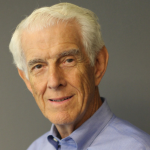
Our People Spotlight series gives you an inside look at our technical experts around the world. This week, we are highlighting a vice president and project manager, specializing in geotechnical and levee projects from our western United States water and civil works team and providing an insight into their inspiration and work.
Rich Millet is a seasoned water resources and dam engineering leader with six decades of experience guiding major infrastructure projects across the United States. Early in his career, he played a central role in dam, surface water and reservoir development along the East Coast before becoming one of the principal design engineers for Metropolitan Water District’s Diamond Valley Reservoir. This is a landmark $2-billion off-stream storage project that transformed an empty valley into a fully operational reservoir in under five years and established critical water supply redundancy for Southern California.
Rich later led the California Department of Water Resources’ Urban and Non-Urban Levee Evaluation Program, a nine-year forensic assessment of roughly 1,300 miles of levees throughout Central Valley, California. The effort produced a comprehensive risk categorization system and helped spur nearly $4 billion in subsequent levee improvements, significantly reducing statewide flood risk to population and infrastructure. Over his long tenure with AECOM and its legacy firms, Rich has also held senior leadership roles, including principal, Bay Area office manager, Denver office manager, Board of Directors member, and Chief Practice Officer before transitioning into his current role as a senior consultant. Today he mentors and advises staff across multiple active water and dam related projects, providing senior technical review, guidance and support. This February, he celebrated an extraordinary milestone: 60 years with AECOM.
Tell us about what inspired you to join the industry.
I was always good at math and science, and as I was finishing high school, I found myself torn between two very different paths. I had a physical education teacher in grammar school who made a great impression on me, and for a while I thought becoming a gym teacher would be a meaningful and rewarding career. I’ve always been athletic, so the idea of working with kids and staying active really appealed to me.
At the same time, my brother-in-law was a civil engineer, and I was drawn to the idea of working outdoors and not being tied to a desk. I ended up choosing engineering, probably with a little encouragement from my parents, and went to Rensselaer Polytechnic Institute, which is a strong engineering school in Troy, New York. During my time there, I joined ROTC, was commissioned in the Corps of Engineers and spent two years at the Army Engineer School at Fort Belvoir teaching basic engineering courses.
After completing my service, I knew I wanted to focus on geotechnical engineering rather than structural or transportation work. That led me to Woodward Clyde, which was one of the top geotechnical firms in the country at the time. I applied and was hired into the New York–New Jersey operations. From there, my water resources career really took off.
I ended up choosing engineering, probably with a little encouragement from my parents, and went to Rensselaer Polytechnic Institute, which is a strong engineering school in Troy, New York.
What is your favorite AECOM project that you’ve worked on and why?
My favorite AECOM project is definitely Urban Levee Evaluation (ULE) and Non-Urban Levee Evaluation (NULE). The project was a nine-year effort, and the sheer scale was incredible. At any given time, we had about twenty to twenty-five inhouse staff working on the project, supported by four or five primary consulting firms and another twenty or so secondary firms, including environmental support teams, surveyors, labs and drilling companies. It really had everything in it, and it was extremely rewarding. One of the biggest accomplishments on this project was developing resources and databases that are still used today. We prepared a handbook for the state that continues to guide consultants working on levee projects in California and beyond. We also created a cost estimating tool, a simplified design flow chart for remediation, and a suite of technical and resource documents that have had long-lasting value. Knowing that these tools are still in use is something I’m very proud of.
Over 60 years, I’ve had the chance to work on a lot of great projects, but this one stands out not just because it was recent, but because of how immersive and complex it was. Nine years is a long time to be involved in a single effort. At times, it felt like a complex balancing act, but it was one of the most rewarding experiences of my career.
One of the biggest accomplishments on the Urban Levee Evaluation and Non-Urban Levee Evaluation project was developing resources and databases that are still used today.
Tell us about your work with cutoff walls and how that became your area of expertise.
I first became involved with cutoff walls in the early 1970s when the technology was still very new. A former Woodward Clyde principal introduced the concept to me. At the time, we had a client building a series of reservoirs that needed a reliable way to control seepage beneath their dams. The idea of creating a vertical, low permeability barrier in the ground to block water flow was innovative for that period, and I was immediately intrigued. We designed and constructed our first cutoff wall for one of their smaller dams, and its success led to several more dams and cutoff wall systems being constructed for that same client. That early exposure put me at the forefront of the technology long before it became commonplace. Over the years, I have authored award-winning technical papers and helped shape technical specifications that are still referenced now. To date, I have participated in over 50 cutoff wall projects with depths reaching 145 feet.
Since then, cutoff walls have remained a consistent and specialized part of my career, particularly for dams and levees where seepage control is critical to public safety. I often get called to support teams across AECOM on technical decisions, design approaches and constructability questions. I also serve on two national technical panels through the Deep Foundations Institute and the United States Committee on Large Dams, helping advance best practices for soil bentonite and related wall systems. Today, I continue to work on major cutoff wall projects, including deep installations for the U.S. Army Corps of Engineers in the Natomas Basin near Sacramento. After more than fifty years in this field, cutoff walls have become one of the areas where I bring deep, practical experience — especially valuable for complex dam projects where seepage control is fundamental to performance and long-term resilience.
After more than fifty years in this field, cutoff walls have become one of the areas where I bring deep, practical experience — especially valuable for complex dam projects where seepage control is fundamental to performance and long-term resilience.
Tell us a story of how your work positively impacted the community.
When I think about how my work has positively impacted the community, I go back to the ULE and NULE programs. The work we did there significantly enhanced public safety and the protection of critical infrastructure in Northern California. Since we completed our evaluations and the resulting remedial construction work, the region has experienced several major storm events, and those levees have performed well. In many ways, the biggest success is that nothing happened. The improvements held, and communities were protected. That is extremely rewarding.
Another major project that stands out is the Diamond Valley Reservoir for the Metropolitan Water District. That reservoir provides almost a year’s water supply for Southern California and was designed with the recognition that much of the region’s water comes from Northern California. If an earthquake disrupted that flow, Southern California could have been in a very difficult position. By creating this massive off-stream storage system, supported by three major dams, the Diamond Valley project helped ensure a more secure and resilient water supply for millions of people. All the water in that reservoir is pumped in from the California and Colorado River Aqueducts, so it serves as a critical buffer for the entire region.
There often isn’t recognition for this type of work because the best outcome is when the public doesn’t notice anything at all, and the systems perform exactly the way they’re supposed to. That’s certainly true for both the levee program and the Diamond Valley Reservoir. The results speak for themselves: communities are safer, flooding risks have been reduced and Southern California now has a far more reliable water supply. Knowing that these efforts have strengthened resilience and protected people’s lives and infrastructure is the real reward.
There often isn’t recognition for this type of work because the best outcome is when the public doesn’t notice anything at all, and the systems perform exactly the way they’re supposed to.
Share a piece of career advice.
I’ve always believed that communication is the key to being a successful consulting engineer. Our work depends on explaining technical recommendations clearly so clients understand what needs to be done and why. If you can’t communicate — whether in writing or in person — it’s very hard to be effective because even the best technical work won’t go anywhere if others can’t follow it.
Today, with so much analysis done on computers and with AI, strong communication skills are more valuable than ever. When engineers learn to speak and write clearly, they can share their ideas with confidence, build trust with clients and take on greater responsibility. Being able to stand in front of a client or community group and explain your work opens doors, and it’s one of the most important capabilities you can develop for a successful and rewarding career.
Header image photo credit: Central Valley Flood Protection Board