


From pilots to programs: Shaping the future of nuclear fusion partnerships at FusionX, Munich

As momentum builds around the commercialization of fusion, the nuclear energy industry is beginning to lay the groundwork for the partnerships, infrastructure strategies and delivery models that will shape its path forward. Our senior vice president and global energy practice lead, Jennifer Obertino, dives into the themes and questions the fusion community is preparing to explore at the upcoming FusionX conference in Munich. From scaling beyond pilots to establishing the collaborative frameworks needed to support a fusion-powered future, our industry leaders explore what it will take to move fusion from scientific breakthroughs to practical application.
Next week, I’ll be joining industry leaders and trusted colleagues from Type One Energy and Tennessee Valley Authority (TVA) on stage at FusionX Global in Munich for a dynamic conversation about “partnerships in fusion.”
As someone who’s spent their career at the intersection of energy innovation and delivery, I know that the path from first-of-a-kind (FOAK) pilot to real-world deployment is never straightforward. It’s a journey that demands technical excellence, trust, transparency, and a willingness to learn, grow and collaborate with others on our collective path to a resilient energy future.
The power of partnerships
No single organization can take on the monumental task of delivering power at the scale, speed or certainty that our current and future energy needs demand. At AECOM, we’ve learned that our greatest impact comes when we act as an integrator: bringing together manufacturers, distributors, regulators and communities to orchestrate the complex dance of delivering clean energy to those who need it most. Our goal is to interconnect all the moving pieces into one harmonized system, helping all our clients turn promising pilots into scalable, profitable programs.
At FusionX, I’ll be sharing the stage with Charlie Baynes-Reid, general counsel and CFO of Type One Energy, Tony Williams, vice president for the Sequoya Nuclear Plant at TVA, and moderator Amy Roma, partner and nuclear energy specialist at Hogan Lovells. Together, we’ll explore what it really takes to accelerate fusion’s path to commercialization. We’ll explore how wide-scale adoption is about more than adopting new technologies and building resilient infrastructure. It’s about strengthening frameworks for partnership that shorten timelines, reduce risk, and give investors and communities the confidence to believe in fusion’s promise.
Scaling from pilots to programs
I’m especially excited to talk about our work with Type One Energy and TVA on the Infinity Two fusion stellarator project — an auspicious collaboration that’s already demonstrating how utilities, innovators and integrators can move faster by working together. Pending continued development and regulatory approvals, the preliminary design of this fusion power plant has the potential to supply TVA with reliable, carbon-free power. We’ll discuss lessons learned and why speed-to-permit is the new currency in energy infrastructure.
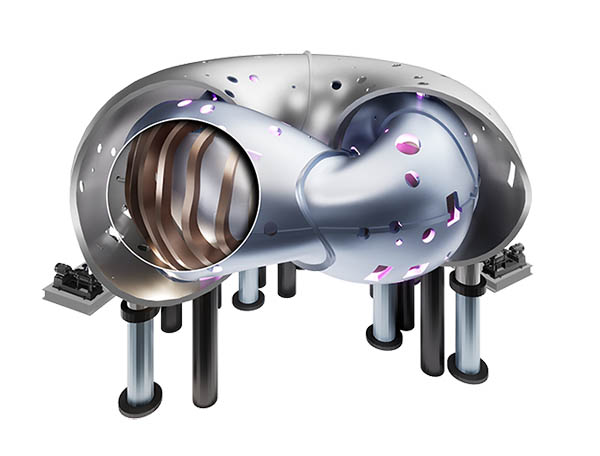
As preliminary design engineering partners, out role is to translate fusion ambition into practical, site-ready infrastructure. Our teams guide clients through regulatory mazes, align diverse stakeholders and sustain project momentum even when conditions are challenging.
Building the pathway to the future of fusion energy
Our specialists bring deep engineering expertise and work side-by-side with innovators like Type One Energy and TVA to:
- Translate early-stage fusion concepts into actionable engineering plans. We help take the Infinity Two fusion power plant from theoretical design to site-ready specifications, ensuring every technical requirement is mapped to real-world constraints.
- Lead site selection and environmental assessments. Our engineers and scientists evaluate potential locations, model environmental impacts and develop permitting strategies that anticipate regulatory hurdles — supporting a clear path through the approval process.
- Integrate complex systems. Fusion projects require seamless coordination of civil, mechanical, electrical and control systems. We manage the interfaces between disciplines, aligning power, controls and safety systems into a coherent, unified design.
- Develop project controls and risk management frameworks. We implement digital project management tools, schedule controls and risk registers that keep delivery on track and transparent for all partners.
- Support first-of-a-kind (FOAK) licensing and compliance. Our regulatory specialists work with clients and authorities to prepare safety cases, licensing submissions and compliance documentation, helping de-risk the path from pilot to commercial operation.
We have made tremendous strides with our partners on our path towards turning fusion’s promise into practical, scalable energy. Follow along with us on our journey as we continue to bridge the gap between innovation and implementation and deliver a better, more resilient world.
If you’re attending FusionX in Munich, I hope you’ll join our session and connect with me afterward. Let’s keep pushing the boundaries, together.