


People Spotlight: Meet Nadiah Abdul Malit
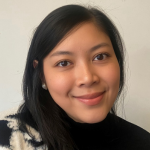
Our People Spotlight series gives you an inside look at our technical experts around the world. This week, we are highlighting an associate structural engineer from our nuclear energy business in Warrington, United Kingdom, and providing you insight into their inspiration and work.
Nadiah is a seasoned nuclear civil and structural engineer whose career began in waste infrastructure before she discovered her passion for nuclear projects. With 16 years of experience, she has led award‑winning, safety‑critical work at Sellafield, the U.K.’s largest nuclear site. She champions diversity in STEM and helps others grow their skills and capabilities while improving nuclear safety across the industry. She is a Chartered Engineer and a member of the Institution of Civil Engineers and the Nuclear Institute, the professional membership body dedicated to the sector.
Tell us about what inspired you to join the industry.
I began my career as a graduate structural engineer in the waste infrastructure team. After 12 months, the team was unfortunately dissolved. At that pivotal moment, my line manager at that time transitioned to the nuclear team and invited me to join him.
Nuclear work was a completely new and somewhat daunting field for me, but I was immediately drawn to the intricacy, precision and depth of detail involved in the projects. What started as an unexpected opportunity quickly became a genuine passion.
Sixteen years later, I am proud to still be part of the industry, continually motivated by the complexity, responsibility and impact of the work we do.
Nuclear work was a completely new and somewhat daunting field for me, but I was immediately drawn to the intricacy, precision and depth of detail involved in the projects.
What is your favorite AECOM project that you’ve worked on and why?
Two projects stand out to me as particularly rewarding, both for the technical challenges involved and the collaborative spirit that underpinned their success.
Both projects stand out because they required innovative, “out-of-the-box” thinking, something that is essential within the nuclear industry. They combined technical complexity, rigorous safety standards and true teamwork, which for me are what make this field so rewarding.
The first was the major decommissioning of the diffuser section atop a 120-metre concrete chimney at the Sellafield site. The diffuser formed part of the filtration system that played a critical role in limiting the release of radiation during the 1957 Windscale fire, preventing a disaster from escalating into a catastrophe. I joined the project during preliminary design and remained through to implementation, culminating in the successful dismantling of the diffuser in November 2021.
Due to radioactive contamination, the structure had to be cut in place using specialised diamond wire saws and removed in blocks up to nine tonnes in weight using a tower crane that had seismically qualified supports and base. The complexity of the engineering solution, combined with the need to coordinate multiple stakeholders across the supply chain, made it an incredibly collaborative effort, one that was recognised with several awards. I began the project as a graduate structural engineer and progressed to lead engineer and project manager, making it especially meaningful from both a professional and personal perspective.
My other favourite was the Harwell Flask Project, which also happened to be at Sellafield, where I was embedded in the client’s team as lead civil and structural engineer. We managed the structural risks while removing a 60-year-old, five-tonne flask from a degraded six-metre-high platform. Given initial uncertainties around the liquor inventory, the flask was assigned the highest safety classification, with worst case assumptions driving a high consequence categorisation.
We designed and implemented a contingency scaffold solution to mitigate the risk of a dropped-load fault while further characterisation work was undertaken. Subsequent historical research and detailed activity calculations enabled a revised consequence assessment, significantly reducing the predicted risk and allowing the operation to proceed using a telehandler to safely lower the flask. Like the first project, this work was recognised with health and safety, and collaboration awards.
Both projects stand out because they required innovative, “out-of-the-box” thinking, something that is essential within the nuclear industry. They combined technical complexity, rigorous safety standards and true teamwork, which for me are what make this field so rewarding.
Tell us a story of how your work positively impacted the community.
In my role, I’ve had the privilege of contributing to something that profoundly affects the wider community: protecting nuclear safety while enabling reliable, high‑quality project delivery. By providing clear technical authority and strong governance, I helped elevate design standards, reduce risks and rework, and strengthen confidence among regulators and stakeholders in the overall safety case.
Beyond the technical impact, my work supported the growth of a resilient civil and structural engineering capability — developing people, setting consistent standards, and ensuring high‑quality delivery across the entire nuclear portfolio. This investment in people and processes helps build a safer, more sustainable future for the communities these facilities serve.
As a millennial, I especially valued collaborating with both Generation X and Generation Z teams. Each group brings unique perspectives and strengths, and I found myself learning from both — enhancing not only our collective work but also my own professional growth.
I contribute to closing the gender gap in STEM by being visible as a woman engineer in a leadership role and showing that these careers are achievable. I mentor and support women and underrepresented groups, helping them build confidence and progress in their careers. I also champion inclusive practices in my teams making sure diverse voices are heard and opportunities are equitable while supporting initiatives that encourage girls and young women to explore STEM. It’s both about representation and creating an environment where everyone can succeed. I was honored to be a shortlisted finalist for Civil Engineer of the Year at the Women In Construction and Engineering (WICE) Awards 2025 for my work.
In my role, I’ve had the privilege of contributing to something that profoundly affects the wider community: protecting nuclear safety while enabling reliable, high‑quality project delivery.
Share a piece of career advice.
One piece of advice I always share is to say “yes” to new tasks and new responsibilities — within reason, of course. Growth rarely comes from staying within the comfort of what we already know. By putting yourself forward for unfamiliar challenges, you accelerate your learning, broaden your technical capability and build confidence in your own judgment.
Saying yes doesn’t mean overcommitting or stepping beyond your competence without support, it means being open to opportunities that stretch you. Some of the most defining moments in a career come from unexpected responsibilities, leading a meeting for the first time, managing stakeholder relationships or taking ownership of a complex technical issue. These experiences not only develop technical expertise but also strengthen leadership, communication and decision-making skills.
In my experience, progression often comes from those moments where you choose to step up rather than step back. Each new responsibility becomes a stepping stone, building credibility and trust with colleagues and clients. Over time, those small “yes” decisions compound into significant professional growth.