


People Spotlight: Meet Jasmin Mejia
Our People Spotlight series gives you an inside look at our technical experts around the world. This week, we are highlighting a market lead and providing an insight into their inspiration and work.
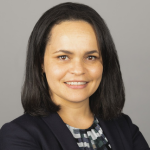
Jasmin Mejia is Environmental Market Leader for Surface Transportation in the San Francisco Bay Area.
She brings a distinctive blend of environmental knowledge, regulatory insight and strategic leadership to deliver transformative projects. Her background in water quality compliance and environmental consulting has earned a strong reputation for guiding complex, multi-agency efforts that enhance resilience and advance multimodal connectivity. Her commitment to community well-being shines through in every project, driving solutions that enhance mobility, improve accessibility, and create lasting benefits for people and neighborhoods.
Tell us a bit about yourself – your role and career journey.
Spending summers in the Dominican Republic, some of my most cherished memories are hiking through lush trails with my grandfather. Those experiences taught me to value the beauty of natural spaces and the sense of connection they create. In high school, an environmental science class opened my eyes to something even bigger: how deeply our lives are interconnected and how infrastructure shapes communities. That realization became the foundation for my education and career.
I knew I wanted to work at the intersection of policy, regulation and environmental science. I earned a Bachelor of Science in environmental management and protection, and a minor in city and regional planning from the California Polytechnic University, San Luis Obispo. My career began at the Central Coast Regional Water Quality Control Board, where I reviewed CEQA (California Environmental Quality Act) and NEPA (National Environmental Policy Act) documents from a water quality perspective and processed water quality certifications. From there, I transitioned into environmental consulting, gaining a deep understanding of multidisciplinary collaboration and its role in shaping resilient, sustainable communities.
I now have the privilege of leading the environmental team and partnering closely with transportation partners to deliver projects that meet client needs and serve communities. As environmental market leader for surface transportation, that spirit of teamwork allows us to connect environmental planning with transportation solutions, helping clients achieve their goals and creating infrastructure that helps local and regional communities move and thrive.
True success happens when diverse perspectives unite to solve complex challenges.
Talk to us about a project that has been a major highlight of your career.
One of the most impactful projects I have managed was the State Route 37 Flood Reduction Project, an environmental adaptation for a vital Bay Area corridor in Marin County that connects several counties in the area. The goal was to adapt the roadway to projected sea-level rise and to improve resilience against flooding and extreme weather. This corridor is critical for commuters and for access to the wine region, contributing over US$1 billion to the local economy. Yet repeated closures from flooding have become more frequent and severe.
The project raised the roadway and added a new bridge to maintain connectivity during winter storms and flooding. What makes this project meaningful to me is its dual benefit: while improving transportation reliability, the design also enhances hydrologic connectivity, supporting wetland restoration and biological resources. It’s a clear example of how infrastructure can protect communities and the environment simultaneously.
What makes this project meaningful to me is its dual benefit: while improving transportation reliability, the design also enhances hydrologic connectivity, supporting wetland restoration and biological resources.
Tell us a story of how your work positively impacted the community.
One of the most rewarding parts of my work is seeing how transportation projects improve lives. By redesigning interchanges and improving access, we’ve transformed corridors into safer, more connected streets where walking, biking and driving are inviting for everyone. These improvements strengthen communities by ensuring continued access to jobs, healthcare and education while reducing environmental impacts through thoughtful design.
Community engagement is central to this process. We use digital stakeholder engagement tools like PlanEngage to make participation easier and make it more inclusive. It allows residents to review documents and share feedback online, reducing paper use and carbon footprint while offering translation features for diverse communities. These practices ensure transparency and give people a voice in shaping projects that affect their daily lives.
Good transportation is more than roads, it’s about creating resilient infrastructure that improves mobility and accessibility for all modes while integrating sustainable design.
Share a piece of career advice.
Investing in your professional community is one of the best ways to grow your career. Surround yourself with inspiring people and stay engaged with industry groups like the Women’s Transportation Seminar (WTS) — not just to find mentors, but to become one. Each stage of your career offers chances to learn from different perspectives, and those diverse views make us stronger, more adaptable and more innovative. Say “yes” to new experiences; each one broadens your skills and shapes your future path.
Above all, lead with kindness. That principle has guided my journey, including a decade on the WTS SF Bay Area board and a recent two-year term as chapter president. Ultimately, this work is about building meaningful connections and contributing to a community that supports and uplifts the next generation of leaders.
Say yes to new experiences, they’re the stepping stones to growth and success.