People Spotlight: Meet Ken Myers
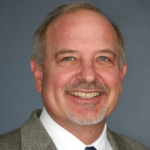
Our People Spotlight series gives you an inside look at our technical experts around the world. This week, we are highlighting a vice president for water resources from our U.S. West Water team and providing an insight into their inspiration and work.
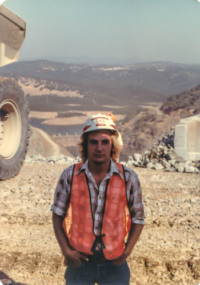
Ken Myers has built a nearly five-decade career dedicated to federal water infrastructure, dam safety and flood risk management — spending more than 20 years with the U.S. Army Corps of Engineers (USACE), Sacramento District and over 30 years supporting major civil works programs in the private sector. After graduating from Chico State University in 1978, he joined USACE through its two-year Junior Engineer Training rotational program. His early assignment as a construction inspector on the New Melones Dam — completed while he was onsite — sparked a long-term commitment to complex dam and flood control projects. Upon completing his rotations, Ken landed in the District’s Levees and Channels Section, where he spent many years advancing urban flood protection work and gaining deep knowledge of the federal project development and delivery process.
After more than two decades of federal service, Ken transitioned to the private sector, where he continued to support USACE and its non-federal partners across California. Over the past 14 years with AECOM, he has remained closely aligned with the USACE Sacramento District, working with regional flood agencies and joint power authorities to deliver major dam, levee and flood system improvements. In his current role, Ken helps guide AECOM’s partnership with USACE and advance critical water infrastructure programs that protect communities and support long-term resilience.
Tell us about what inspired your career in dams.
I attribute my interest in dams and flood control to my dad during my childhood, even though he likely had no idea he was influencing my future career path. When I was growing up in the 60s, a large dam was being built on the Feather River, not far from the small agricultural town where I was raised. My dad used to take us up to the overlook where you could see the dam under construction. It seemed like we went there every single weekend, and I remember seeing it slowly rise and take shape, bit by bit.
That river had flooded the year I was born, in 1955, and the Oroville Dam eventually alleviated a lot of that threat. Before the dam was fully completed in 1970, there were still moments when high river stages created real concern. I remember one Christmas when I was about seven or eight, the Feather River was running so high it was almost up to a bridge crossing in town. Even though the Oroville Dam wasn’t fully functional yet, there was enough of the embankment built to help buffer that flood risk. Our family left home for a few days because of the threat, and when we returned, we discovered that my dad and grandfather had moved things up off the floor — including the big console TV — to try to floodproof the house. Looking back, I had no idea how much all of that was sinking in. When you are a kid, it is not a conscious thought that you are going to become a civil engineer because of dams and flood control projects. But looking back, I’m sure those experiences shaped me — even if I didn’t realize it at the time.
When you are a kid, it is not a conscious thought that you are going to become a civil engineer because of dams and flood control projects. But looking back, I’m sure those experiences shaped me — even if I didn’t realize it at the time.
What is your favorite AECOM project that you’ve worked on and why?
One of my favorite projects at AECOM has been the Folsom Dam Raise. The goal is to raise the perimeter of the reservoir by six and a half feet. Folsom has the main concrete dam with the spillways and tainter gates, but then around the perimeter there are these low spots, including embankment wing dams, eight earthen saddle dams, and the mile-long Mormon Island Auxiliary Dam (MIAD). AECOM was awarded the work on Dikes 7 and 8 and MIAD, and we have been working on this project for about seven years now.
At the project kickoff, USACE let us know they wanted Dike 8 completed on an accelerated schedule, and we worked closely with them to make that happen. As we continued with the designs for Dike 7 and MIAD, project priorities evolved, and we supported USACE through an alternatives analysis to determine the best approach moving forward. Originally everything was going to be a full earthen raise, but through that process the decision was made to go with parapet walls on top of several of the embankments instead. That meant reworking some of the designs, including Dike 7 from final design and MIAD from about 65 percent, but it was the right solution for the project.
Construction of the MIAD raise has just been completed, with Dike 7 construction planned to follow. It has been a complex, multi-year effort with changing needs and fast-track milestones, but it has been incredibly rewarding. Working side by side with USACE, adapting as the project developed, and helping move a major flood risk management project forward has made this one especially meaningful for me.
Working side by side with USACE, adapting as the project developed, and helping move a major flood risk management project forward has made this one especially meaningful for me.
Tell us a story of how your work positively impacted the communities in California.
A lot of the work I am most proud of has been in the Sacramento region and up through the Yuba City/Marysville area. These are places where communities were directly affected by flood risk, to the point where flood moratoriums were put in place. One example is the Natomas area, just north of downtown Sacramento. At one point, no new development was allowed, and it was very difficult for people to get flood insurance. Through the flood improvement work in Natomas, and in the Yuba River Basin as well, we were able to help demonstrate adequate progress to FEMA. There is a whole process behind that, but once the region met those requirements, the moratorium was lifted and you could start to see infill development return.
This flood protection development made a real difference for people living there. I live in a floodplain myself, and because of the work that local flood agencies have done in partnership with USACE, I believe the risk of flooding has been reduced. I still carry flood insurance, but at a much more affordable, preferred risk rate. Without these improvements, my insurance bill would be sky high. Knowing that our work has helped lower that burden for entire communities — and reduced their flood risk at the same time — is something I feel really good about.
Through the flood improvement work in Natomas, and in the Yuba River Basin as well, we were able to help demonstrate adequate progress to FEMA. There is a whole process behind that, but once the region met those requirements, the moratorium was lifted and you could start to see infill development return.
Share a piece of career advice.
My advice is to make sure you become technically proficient in your field. A strong technical foundation really does carry you through your career. When I first started doing design work, I was drawing on mylar with a T-square and calculating quantities with a planimeter. Now technology is completely different, from digital design tools to modern surveying equipment, and it continues to evolve. It has been remarkable to see how much things have changed and how much more precise the work has become. Building solid technical skills early on will help you adapt to those changes and set you up for long-term success.