


People Spotlight: Meet Joy Villafranca
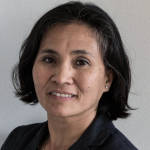
Our People Spotlight series gives you an inside look at our technical experts around the world. This week, we are highlighting a senior engineering manager from our Transportation business line in the U.S. West region and providing an insight into their inspiration and work.
With over three decades of experience in civil engineering and 15 years at AECOM, Joy Villafranca has dedicated her career to shaping transportation systems that serve and enhance our communities and environment. As an engineering manager, Joy leads complex projects that balance mobility, sustainability and safety.
Tell us a bit about yourself, your role and career journey.
I joined AECOM 15 years ago driven by a passion for designing transportation systems that make life easier, safer and more sustainable. That vision has guided my 35-year career in civil engineering. After earning my degree from the University of California, Berkeley, I started as a transportation engineer and later transitioned into project management. Today, I oversee engineering tasks, budgets and scopes for projects that impact thousands of people every day.
Growing up, I never imagined becoming an engineer, I didn’t even know what the job entailed! My family immigrated from the Philippines when I was eight, and like many immigrant parents, mine hoped I’d pursue medicine or nursing. But I was drawn to math and science and wanted a career where I could apply those passions in a tangible way. The turning point came in high school when an electrical engineer visited our class. Their professionalism and enthusiasm inspired me to explore engineering. Later, an internship at a transportation infrastructure company during college sealed the deal. Seeing how transportation projects serve the public and solve real-world problems continues to inspire my work today.
What project has been a major highlight of your career?
One of the most meaningful projects of my career has been the State Route 37 interim improvements. I’ve worked on this corridor for nearly a decade, addressing congestion while planning for the impacts of sea level rise. As climate change accelerates, building transportation resiliency is no longer optional — it’s essential. This project exemplifies how agencies, engineers and environmental experts can come together to deliver solutions that balance mobility with ecological stewardship. Partnering with our client California Department of Transportation (CalTrans) and our multidisciplinary team has been incredibly rewarding. Their leadership and vision allowed us to prioritize both immediate improvements and long-term adaptation strategies. Implementing interim measures while laying the groundwork for future resilience proves that progress and sustainability can coexist.
Another highlight is the Golden Gate Bridge Movable Median Barrier Project. In partnership with the Golden Gate Bridge Highway and Transportation District, this project introduced a dynamic barrier system that allows lane configurations to shift based on real-time traffic demand. This resulted in reducing congestion while virtually eliminating the risk of head-on collisions. Completing the installation required an unprecedented weekend closure of the Golden Gate Bridge, but seeing the barrier in place was unforgettable, knowing it would safeguard millions of commuters and visitors for decades to come. The project earning the Award of Merrit Project of the Year from the Metropolitan Transportation Commission (MTC) was a testament to the success of this effort and to the District’s leadership in pioneering solutions that enhance public safety while preserving the integrity of its most iconic landmark.
These experiences reaffirm my passion for solving complex problems and finding innovative, practical solutions that improve mobility, protect communities and create lasting impact.
Engineering gives us the power to solve real-world problems and create solutions that last for generations.
How does the unique culture and character of the Bay Area influence your approach to your work?
The Bay Area is deeply conscious of nature and social equity, and that shapes how I approach every project. I start by listening to community priorities and understanding the context — urban neighborhoods, wetlands, wildlife refuges — so we can preserve community and natural resources while meeting transportation needs. For me, it’s about designing transportation that respects the environment while making life better for people. That means balancing sensitive natural areas with the need for safe, accessible travel and finding ways to enhance public access through trails, parks and viewpoints.
I’m passionate about active transportation in part because I experience it on my commute to work by e-bike. Making streets safer for cyclists and pedestrians is both professional and personal. Complete Streets features like wider sidewalks, Americans with Disabilities Act-compliant curb ramps, protected bike lanes and safer crosswalks help prioritize people in all modes of transportation.
At AECOM, I’m lucky to work with a team of like-minded individuals who share the same goals to help the community thrive. Together, we preserve connections to our environment, avoid unnecessary impacts, and meet the needs of clients and the communities they serve. Our environmental and transportation teams collaborate consistently, educating each other and finding creative ways to minimize impacts while improving access. Seeing the results in safer streets — healthier communities, and stronger connections to nature — is what makes this work deeply meaningful to me.
Innovation begins with collaboration. When diverse perspectives come together, we unlock solutions to the toughest challenges.
What advice would you give to someone starting their career?
Teaching and mentoring other engineers is something I value deeply as they begin building their careers in transportation. I enjoy showing them the full journey — how a project starts with planning, through the transformation, and how everything comes together to create real impact. Sharing that process and those moments offers inspiration and helps them see in real time the positive difference our work makes in communities.
My advice: keep working hard, stay curious and never hesitate to ask questions. You can’t solve everything on your own. Partnering with other experts and embracing collaboration is key. Don’t be afraid to reach out for help; the worst anyone can say is no.
Engineering is about problem-solving, and the best solutions often come from teamwork and learning from others.